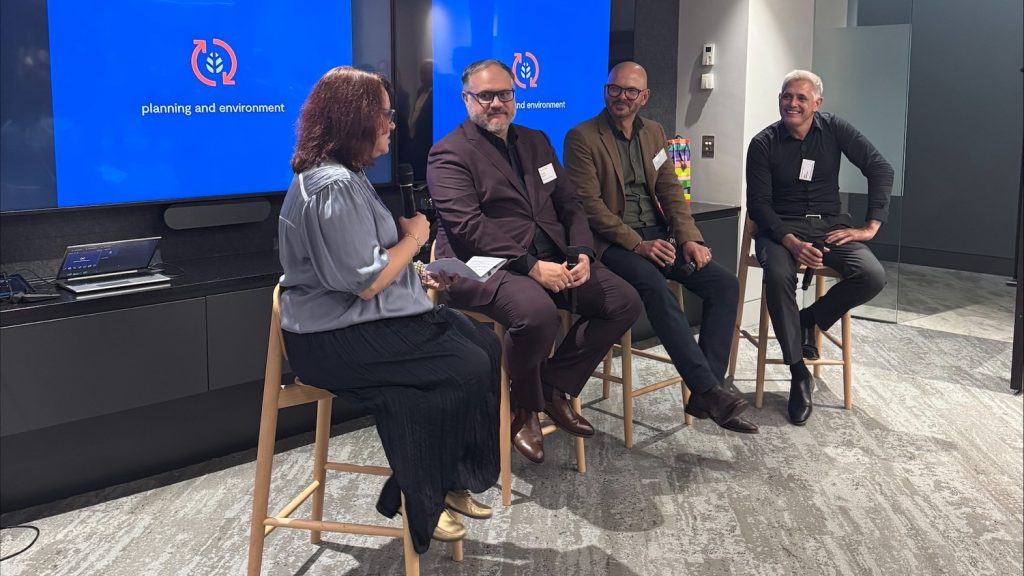
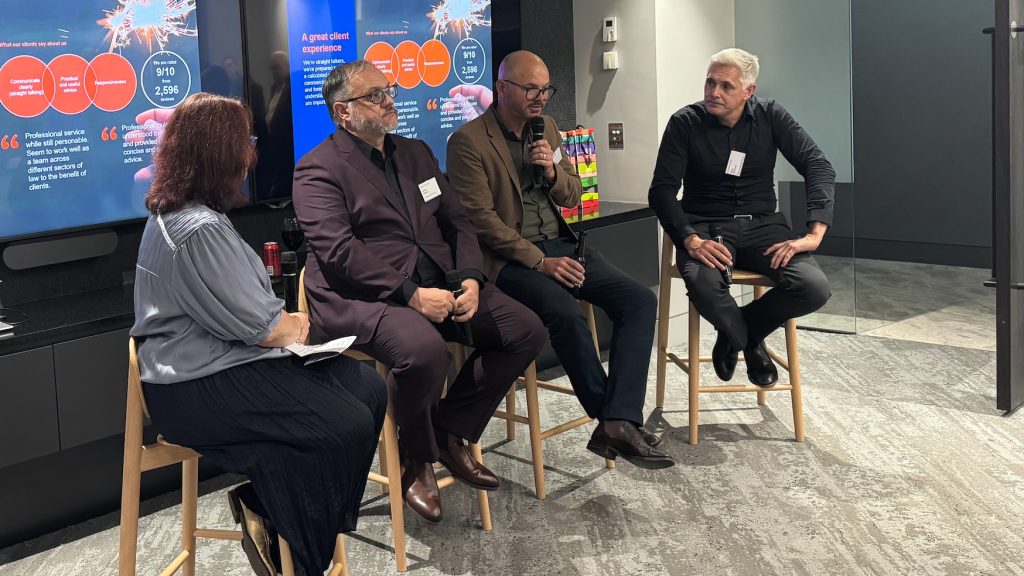
On 19 September, RCP Managing Director Greg Atkinson joined a panel of industry leaders at Macpherson Kelley’s Annual State of the Market Qld event, an exclusive forum that brings together clients, referrers, and professionals to explore the latest trends shaping the property and construction sectors.
With Queensland navigating its most active development phase being driven by transformative projects like Cross River Rail, Brisbane Metro, and preparations for the 2032 Olympic Games, it is standing at crossroad.
The panel, moderated by Suzy Cairney, principal lawyer, infrastructure, construction & energy at Macpherson Kelley, featured expert insights from Julian Hemms (HJA Dispute Services) and Nick Symonds (MAS Architecture Studio), who shared their perspectives on the challenges and opportunities ahead. Greg brought a strategic project procurement and delivery lens to the discussion.
“As South-East Queensland enters a critical phase of development, smarter delivery models are essential to meet the scale and complexity of what’s ahead. We’re seeing a shift toward more collaborative approaches, like alliance contracting, program delivery partnerships, and Modern Methods of Construction (MMC) that prioritise integration, innovation, and long-term value.”
Our construction workforce is shrinking at the very moment demand is peaking. Traditional building methods alone can’t bridge this widening gap, and while modular construction offers an opportunity for a faster, more efficient and cost effective alternative, it relies on broadening workforce capability and capacity to allow MMC to scale up. This challenge calls for a shift in industry norms. Queensland faces a choice: continue relying on conventional methods that are not able to meet demand and therefore accept that not all that could and needs to be delivered will, or embrace modern construction systems that maximise the capacity of the existing workforce and unlock new efficiencies across the pipeline,” said Greg.
Modern Methods of Construction: the way forward?
As Queensland prepares to deliver an unprecedented pipeline of major infrastructure projects over the next seven years, the time rethink their delivery is now. Modern Methods of Construction (MMC) including modular, offsite, and digital construction techniques offer a transformative opportunity to deliver faster, safer, and more sustainable outcomes. But to realise this potential, Queensland must embrace a new model of collaboration between government and industry.
Why MMC, and Why Now?
MMC is not just about technology, it’s about reimagining the entire construction process, starting with design. With labour shortages, rising costs, and increasing pressure to meet sustainability targets, traditional methods alone won’t meet the demands of Queensland’s infrastructure boom.
Done properly, with government led initiative coupled with industry investment and upscaling we could see MMC significantly reduce build times, improve safety and quality, and lower environmental impact, as per the success seen across global exemplars. MMC can also help address labour shortages and cost pressures, provide an opportunity for regional manufacturing and job creation.
Lessons from Europe: Collaboration is Key
Across Europe, governments have played a proactive role in enabling MMC adoption.
In the United Kingdom, the government has embedded MMC into public procurement frameworks, including a presumption in favour of offsite construction for departments since 2019. The MMC Guidance Note outlines how departments should integrate MMC into delivery strategies, supported by the Construction Playbook and Transforming Infrastructure Performance roadmap (1. UK Government MMC Guidance Note).
Other organisations like the Institute of Construction Management advocate for innovative procurement models and statutory reforms to support MMC adoption, particularly in housing (2. ICM MMC Framework).
In Sweden, MMC is deeply embedded in housing and transport delivery. A Savills Sweden report highlights how factory-built homes reduce carbon emissions and waste, driven by government support and sustainability goals. Initiatives like “Homes for Heroes” aim to scale up offsite construction for key workers. (3. Savills Sweden Spotlight).
A comparative study published by MDPI found that Sweden’s success stems from gradual, embedded innovation and lean industrial practices, supported by policy alignment and industry capability (4. MDPI Comparative Study).
What Needs to Happen in Queensland
To reproduce this success in Queensland, it is a long-term process and requires commitment and investment. MMC can’t be seen as a quick fix or modular elements tacked onto traditional methods of construction. Bold steps need to be taken:
- Policy Leadership: Government needs to provide clear support for MMC through policy, procurement, and planning. This includes mandating MMC in suitable projects and creating incentives for innovation.
- Industry Partnerships: Collaboration must go beyond consultation. Joint ventures, innovation alliances, and shared risk models can help de-risk MMC adoption and build trust across the supply chain.
- Skills and Capability Building: Investment in training, accreditation, and education is essential to prepare the workforce for new technologies and methods.
- Infrastructure for Manufacturing: Regional hubs for offsite manufacturing can unlock economic development and decentralise construction activity.
- Data and Standards: Shared digital platforms, open data standards, and performance benchmarks will ensure consistency and transparency across projects.
Queensland has the scale, ambition, and talent to lead the nation in MMC adoption. But success will depend on a shared vision and coordinated action between government and industry. By fostering genuine collaboration between government and industry, like we see in Europe, it can be done.
The next seven years are not just about delivering infrastructure. They’re about shaping the future of construction in Queensland.
—————————————————-
About Macpherson Kelley
Macpherson Kelley is a full-service commercial law firm with deep expertise in the property and construction sectors. Their services span a wide range of legal support tailored to the unique needs of developers, builders, investors, and other stakeholders in these industries.
—————————————————-
References:
- https://assets.publishing.service.gov.uk/government/uploads/system/uploads/attachment_data/file/1102387/20220901-MMC-Guidance-Note.pdf
- https://the-icm.co.uk/2024/01/28/pioneering-modern-methods-of-construction-mmc-through-innovative-procurement-and-legal-frameworks-for-sustainable-housing-development-in-the-uk/
- https://en.savills.se/research_articles/264427/301059-0
- https://www.mdpi.com/2075-5309/15/18/3374